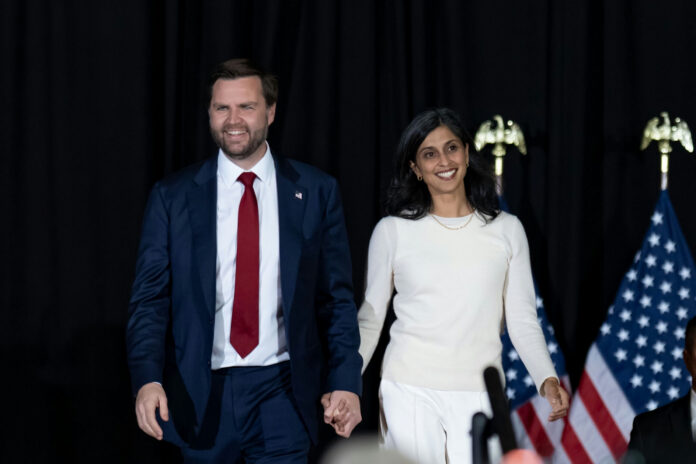
Vice President JD Vance found himself caught in a linguistic trap during a recent interview, defending Border Czar Tom Homan against bribery allegations while carefully avoiding denying that Homan accepted $50,000 in cash from undercover agents.
The Semantic Dance Around Alleged Cash Payments
The viral moment centers on Vance’s carefully parsed defense of Tom Homan during a live interview. When confronted about allegations that Homan accepted $50,000 from undercover agents posing as executives seeking favorable immigration contract treatment, Vance deployed precise legal language. He insisted Homan “didn’t take a bribe” and emphasized no charges were filed. The interview host immediately seized on what Vance conspicuously avoided saying: whether Homan actually accepted the cash. This exchange crystallizes a familiar Washington pattern where technical accuracy masks uncomfortable truths, leaving viewers to parse the difference between legal definitions and ethical reality.
The distinction matters immensely in legal terms but sounds hollow to average Americans watching a Vice President tie himself in rhetorical knots. Accepting cash from individuals seeking government favors creates an appearance problem regardless of whether prosecutors can prove quid pro quo corruption meeting statutory bribery definitions. The absence of criminal charges does not equal exoneration in the court of public opinion, especially when the accused holds significant power over immigration enforcement. Vance’s defense highlights the challenge facing any administration official tasked with defending colleagues against allegations that may not meet criminal thresholds but still stink of impropriety.
When Foreign Policy Meets Viral Mockery
Vance’s troubles compounded during his diplomatic mission to India, where he met with Prime Minister Narendra Modi. Critics seized on unrelated commentary comparing failed “Greenland takeover” ambitions with papal remarks, creating another viral moment. The India trip should have provided Vance an opportunity to demonstrate foreign policy credentials and distance himself from domestic scandals. Instead, social media commentators weaponized the visit to layer additional ridicule onto existing narratives. YouTube channels amplified these moments, with some videos attracting hundreds of thousands of views from audiences hungry for content portraying Trump administration officials as bumbling or dishonest.
The media ecosystem surrounding these incidents reveals how modern political combat operates. Partisan YouTube channels with substantial followings dissect every verbal stumble, parsing interviews for gotcha moments that confirm predetermined narratives. Left-leaning content creators frame Vance as evasive and compromised, while conservative defenders dismiss the coverage as biased media manipulation. The truth likely occupies messier middle ground: a Vice President struggling to defend an appointee facing serious allegations while maintaining plausible deniability, captured by cameras and distributed to millions within hours.
The Broader Pattern of Public Embarrassment
These incidents fit into a documented pattern of public controversies following Vance since his transformation from Trump critic to loyal running mate. His “childless cat ladies” remark from 2024 became fodder for endless mockery, demonstrating how a single poorly considered phrase can haunt a political career. The migration from bestselling author of Hillbilly Elegy to Ohio Senator to Vice President brought exponentially increased scrutiny. Every verbal misstep gets magnified, every defense parsed for inconsistencies, every foreign trip analyzed for gaffes. The question of how much humiliation Vance can endure may matter less than whether these accumulated embarrassments affect his political effectiveness or future prospects.
The Homan situation presents particular challenges because it touches immigration enforcement, the administration’s signature issue. If the Border Czar faces credibility problems over alleged cash acceptance, it undermines confidence in immigration policy implementation regardless of legal technicalities. Vance’s defense strategy of emphasizing the absence of charges while avoiding substantive denial of cash acceptance satisfies lawyers but alienates citizens expecting straightforward answers. Whether this approach represents shrewd damage control or damaging evasion depends largely on partisan perspective, illustrating how fractured American political discourse has become when even factual questions generate wildly divergent interpretations.