
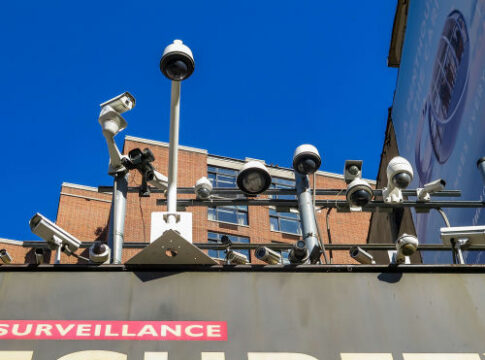
The leaked Madison Square Garden security database is not just another story about facial recognition in stadiums; it is a concrete example of how private venues can quietly turn safety infrastructure into a tool for profiling guests by sexuality, gender identity, and perceived “risk,” with almost no external oversight.
Key Points
- Leaked MSG records show a large, long-running security database assigning “risk” scores and identity tags—including an explicit “LGBTIA” label—to thousands of celebrities and guests.
- The system appears to blend conventional threat assessment with behavioral profiling, social media sweeps, and watch lists whose purposes go beyond physical safety.
- Specific allegations and lawsuit filings indicate that at least one trans woman was surveilled and treated as a threat largely because of her gender identity, though MSG’s lawyers vehemently deny this.
- MSG publicly insists its surveillance program targets only security threats and rule violators, but it has not offered a detailed, evidence-based rebuttal to the leaked database contents.
- This controversy sits inside a broader industry pattern: entertainment venues are rapidly expanding biometric surveillance and data mining, while regulators lag behind on discrimination and privacy protections.
From Crowd Safety to Categorical Profiling
The starting point for any serious analysis is the evidence of what Madison Square Garden actually built. According to reporting based on a 45-gigabyte leak of internal MSG data obtained by the hacker group ShinyHunters, the organization maintained a Salesforce-based security database with roughly 39,000 individuals tracked and classified. Within this system, hundreds of celebrities, superfans, and high-profile guests were assigned “risk scores” and tagged with identity markers, one of which was an explicit “LGBTIA” label. The data show entries dating back to late 2020, with updates running through mid-2024, signaling that this was not an experimental pilot but a sustained practice lasting several years.
On paper, venue surveillance is usually justified as a way to detect violence, trespass, or disruptive conduct. Industry guidance for stadiums and arenas emphasizes crowd management, weapons detection, and incident documentation as core security goals. In many large venues, networked cameras, facial recognition, and integrated access control have become standard, promoted as essential tools in a high-risk environment. MSG’s public statements fit this script; the company has repeatedly framed its use of facial recognition and watch lists as measures to identify “potential security threats,” including violent patrons and rule violators.
What the leak reveals, however, is that the Garden’s security apparatus did far more than watch for fights in the stands. The database reportedly included fields for “SM concerns” (social media concerns), carried notes from security staff about online behavior, and tracked guests who might be angling for complimentary tickets. Specific entries described celebrities and fans in terms that have little to do with physical danger—assessing their public criticism of MSG or its owner, James Dolan, and their social profiles. This is surveillance in the service of reputation management and operational convenience, not merely safety.
A List of “Gay Celebrities” and the Question of Discriminatory Intent
The phrase “Madison Square Garden kept a list of gay celebrities” is not rhetorical flourish; it refers to a documented subset of the database where public figures were categorized by sexual orientation under the “LGBTIA” tag. Investigative reporting describes records in which that tag coexists with risk levels and other classifications, effectively linking a person’s queerness to a security profile. For LGBTQIA guests, the core concern is not that their identity was known—that is often public—but that it was systematized, stored, and potentially operationalized by a powerful private gatekeeper.
There is, however, an important distinction between documentation of tagging and proof of discriminatory policy. The leaked records and lawsuits show that MSG tagged people as “LGBTIA” and assigned risk scores, but the available documents do not include an internal directive saying “target LGBTQIA guests” or a written policy explaining how sexuality and gender identity should affect treatment. In other words, the surveillance practice is well evidenced; its specific intent regarding LGBTQIA people remains partly inferential.
Allegations around a trans woman named Nina Richards sharpen this debate. A 2025 lawsuit by a former MSG security employee claims that Richards’ movements at the Garden were obsessively tracked over two years and that she was treated as a risk largely because she is trans. That complaint portrays a pattern of repeated monitoring—logs of when she sat down, ordered a drink, or moved through the venue—which goes far beyond routine observations. A different former staffer echoed the claim in an interview, stating that a trans woman had been targeted solely due to her gender identity.
MSG’s attorneys forcefully reject this, asserting in court filings that the stalking allegation was fabricated to damage the company’s reputation and to justify exclusion from the arena. They characterize the claims as defamation, suggesting the surveillance described is exaggerated or invented. This direct contradiction between sworn allegations and legal rebuttal is where the factual dispute is sharpest. The leaked database supports the existence of intensive tracking and identity-based tags; whether MSG management intentionally used those tools to discriminate against LGBTQIA guests will likely turn on further discovery, depositions, and forensic analysis.
How MSG Explains Its Surveillance—and What It Does Not Address
In public, MSG has tried to narrow the frame. When earlier reporting exposed its use of facial recognition to ban lawyers from firms suing Dolan’s companies, MSG told The New York Times that the technology helped identify “security threats” and people who had violated venue rules. After the ShinyHunters leak and subsequent Wired coverage, MSG issued a blanket denial, calling the reporting “false, misleading, unverified allegations.” The organization emphasizes its right and obligation to maintain a safe environment and insists it does not target guests based on protected characteristics.
Notably absent from MSG’s response is engagement with the specifics of the leaked data. The company has not released a detailed, item-by-item analysis of the 45GB trove, has not publicly explained why an “LGBTIA” category existed in its security database, and has not provided a comparative breakdown of risk scores across different groups. Nor has there been an independent forensic audit—by a regulator or third-party expert—either confirming the leak’s integrity or demonstrating that the records were misleadingly interpreted.
This kind of categorical denial, without grappling with technical particulars, is common in corporate crisis communications; it keeps options open and avoids conceding any factual ground that might later be used in litigation. For an informed observer, though, the absence of a granular rebuttal matters. When structured data fields, timestamps, and staff notes are visible in a leak, a venue operator could, in principle, show that tags had no bearing on decisions, or that certain fields were created but never used. MSG has not done so publicly.
Inside the Wider Surveillance Machine at Entertainment Venues
To understand why the MSG case resonates beyond New York, it helps to locate it in a broader transformation of entertainment security. Across concerts, sports events, and festivals, venues are increasingly deploying biometric recognition, machine learning, and live data analysis to monitor patrons. Some systems analyze video feeds in real time to flag “abnormal” movement patterns or potential hazards; others integrate ticketing, marketing, and security databases to build profiles of repeat visitors.
Ticketing giants and venue operators have already faced lawsuits over digital surveillance and alleged data monetization. Complaints against firms like Ticketmaster describe unconsented tracking of fan behavior across apps and physical spaces, with data used for targeted marketing or dynamic pricing. Academic work on entertainment surveillance argues that these systems blur boundaries between safety, commerce, and social control: when every aspect of a visit can be logged, the same infrastructure that identifies a dangerous actor can also be used to reward influencers, punish critics, or chill dissent.
MSG’s database, as described in the leak, fits squarely in this pattern. It combined elements of classic threat assessment—watch lists, “DO NOT” flags—with reputational considerations and identity categories. Security staff reportedly combed social media to flag people seeking free tickets or speaking negatively about Dolan, then logged those findings for future reference. For celebrities and high-profile fans, being categorized as “low risk” or “flagged” became part of an internal calculus about access, treatment, and attention. That is qualitatively different from scanning for banned weapons at the gate.
Evidence Gaps, Legal Battles, and What Comes Next
Even with a substantial leak and multiple investigative stories, there are still significant unknowns. The public has not seen MSG’s complete internal policies governing database creation, nor the full chain of decision-making that led to fields like “LGBTIA” and “SM concerns.” There is no executive-level testimony on the record explaining how and why these tags were used, nor statistical analysis comparing how often LGBTQIA-tagged individuals received high risk scores relative to others.
These gaps are not just academic. They are precisely the questions that class-action plaintiffs, digital rights groups, and regulators are beginning to ask. A June 2026 class-action lawsuit argues that Dolan’s escalating surveillance practices contributed to the data leak and exposed fans and guests to harm. Advocacy organizations such as the Surveillance Technology Oversight Project have called for forensic audits of the ShinyHunters dataset and subpoenas for MSG executives, aiming to trace the origins and impacts of identity-based tagging. Should courts compel depositions and document production, we may get a clearer view of whether LGBTQIA guests were disproportionately labeled as risky or treated differently at the door.
For now, a reasonable reading of the evidence supports three firm conclusions. First, MSG operated a sophisticated, long-running security database that went well beyond standard incident logs, incorporating identity tags, risk scoring, and social media surveillance. Second, that system explicitly categorized some guests by sexuality and gender identity via an “LGBTIA” label and was used, at least in some cases, to monitor individuals with unusual intensity. Third, MSG publicly denies discriminatory intent, but has not yet provided a detailed technical or statistical rebuttal to the leaked records, leaving serious questions unanswered.
Why This Matters for Anyone Who Walks Through the Turnstiles
For many readers, the instinctive reaction may be to write this off as a problem for celebrities and superfans, not ordinary ticket holders. That would be a mistake. The logic of MSG’s database—build profiles, tag identities, track behavior over time—is scalable. Once such a system exists, the marginal cost of adding more entries is low; the temptation to extend profiling from the front row to the cheap seats grows as data storage and analytics become cheaper.
And while queer celebrities were among those tagged, the precedent is what matters. If a private venue can quietly assemble a list of “gay celebrities” with associated risk scores, there is little structural barrier to similar lists focused on political activists, labor organizers, or fans who have sued over injuries. MSG has already used facial recognition to ban lawyers from firms litigating against Dolan’s businesses, a move that raised alarms among civil liberties advocates. The Garden is, in that sense, a bellwether: a visible instance of how owner preferences and corporate risk aversion can shape who gets to enter, where they sit, and how they are watched.
For regulators and courts, the challenge is to distinguish between legitimate, proportionate security and surveillance that shades into discrimination and retaliation. That will require more than press releases. It calls for independent audits of leaked data, transparent standards for how identity categories can be used (if at all), and meaningful remedies when guests are profiled for who they are rather than what they have done. The MSG controversy has pulled back the curtain on one arena’s practices; the underlying question—who controls the data trails of our public lives—extends far beyond the world’s most famous arena.
Madison Square Garden has assigned labels to roughly 400 celebrities, Knicks superfans, and Taylor Swift wedding guests, which include sexual orientation and risk level, as part of its 39,539-person VIP database.
A Boogie Wit da Hoodie: High Risk
Adam Pally: Do Not Host
Anna… pic.twitter.com/ZIgUTPaEp1— Front Office Sports (@FOS) July 9, 2026
The Stakes for Privacy, Dignity, and Public Space
At bottom, the debate over MSG’s surveillance machine is about the kind of public experience we are willing to accept in the twenty-first century. Stadiums and concert halls are private property, but they function as civic spaces: places where people gather, celebrate, protest, and, in the case of LGBTQIA fans and artists, affirm identities that have long been marginalized. When those spaces quietly become sites of categorical tracking, the risk is not just misplaced security priorities; it is a normalization of selective scrutiny by gatekeepers who answer to shareholders, not citizens.
Whether future litigation finds that MSG’s database constituted unlawful discrimination or merely distasteful profiling, the evidence already on the table should prompt a broader reassessment. Safety is non-negotiable in large venues—but safety frameworks that rely on opaque identity tagging and unaccountable watch lists are neither inevitable nor cost-free. As more leaks, lawsuits, and investigations surface around entertainment surveillance, the Madison Square Garden case will stand as an early, vivid example of how far such systems can go when no one outside the owner’s suite is watching.
Sources:
feedpress.me, wired.com, instagram.com, youtube.com, reddit.com, frontofficesports.com, ag.ny.gov, nytimes.com, privacyworld.blog, facebook.com, inc.com, omnilert.com, pmc.ncbi.nlm.nih.gov