
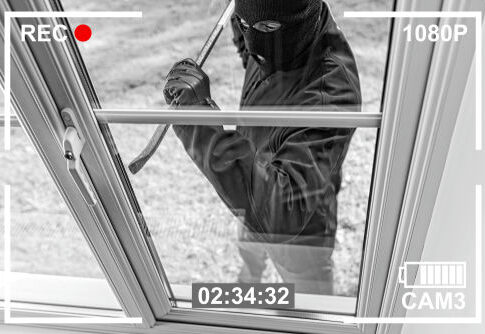
A delivery bag on the porch is not dinner—it is the doorbell test for a burglary crew.
Story Snapshot
- Los Angeles prosecutors charged seven suspects tied to organized residential burglaries across the San Fernando Valley and West Los Angeles [1].
- Authorities say some crews fake food deliveries, drop a bag, and ring once to gauge whether anyone is home [2].
- Detectives displayed disguised cameras and warned about Wi-Fi jammers and hidden lawn devices used to case homes [2][4].
- Reporters note qualifiers—“alleged,” “suspected”—because some organization claims remain untested in court [3][4].
Prosecutors allege a multi-neighborhood burglary blitz with sophisticated pre-casing
Los Angeles County prosecutors announced felony charges against seven suspects, describing coordinated residential burglaries spanning the San Fernando Valley and West Los Angeles [1]. One defendant, identified as Byron Gonzálo Sáez Sotomayor, also known as Kevin Diaz, faces 15 counts of first-degree residential burglary, three counts of attempted first-degree residential burglary, and one count of grand theft of a firearm, tied to 18 homes between January 2025 and May 2026, according to the report [1]. The breadth and timeline point to planning, mobility, and methodical selection rather than smash-and-grab randomness.
Sheriff Robert Luna outlined a surveillance-centric playbook: crews monitor social media for new luxury purchases or vacation photos, then strike when the house appears empty [1]. Reporters at a news conference described a wooden box wrapped in fake turf that, when opened, revealed a phone, a camera, and extra batteries—exactly the kind of low-profile, long-dwell device a patient crew would use to watch a target without tripping alarms [2]. This approach mirrors property-crime trends where offenders adapt tools to reduce risk and maximize payoff.
Southern California Police Urge Homeowners to Search Their Yards for Hidden Cameras Planted by Illegal Alien Burglary Rings, Thanks to Gavin Newsom’s Sanctuary State Policies
Southern California residents are being urged to physically inspect their property after the Los Angeles… pic.twitter.com/7IrFaJIGXO
— Sergeant News Network (@sgtnewsnetwork) May 17, 2026
Delivery-bag ruse and anti-detection gadgets elevate simple burglary into tradecraft
ABC7 reported authorities’ warning that in some cases burglars place a DoorDash-style bag on the porch and ring the bell once to test occupancy, a minimalist probe that doubles as a camouflage prop if neighbors look over [2]. The same brief notes references to Wi-Fi jammers and hidden cameras, tactics that complicate homeowners’ reliance on wireless doorbells and cloud cameras [2]. Torrance police similarly warned residents about surveillance devices hidden in landscaping, sometimes wrapped below the grass line with battery packs for extended monitoring [4].
NBC4’s coverage of a Ventura County operation described three arrests detectives linked to burglaries in both Los Angeles and Ventura counties over roughly six weeks, following surveillance and a search warrant [3]. The cross-jurisdiction thread matters: coordinated crews do not respect city limits, and they select neighborhoods with consistent architecture, predictable schedules, and quick freeway access. That target logic tracks with criminology basics—offenders favor routine, low-friction environments that let them stage, test, and exit quickly.
Claims of “South American theft groups” dominate headlines but still hinge on case files
Prosecutors and police repeatedly used the phrase “South American theft groups,” a label echoed by multiple outlets [1][2][4]. NBC4, however, added caution on one segment: detectives had not confirmed that arrestees belonged to a formal criminal organization, despite linkage across incidents [3]. That caveat matters for accuracy and fairness. Until affidavits, digital forensics, and sworn testimony surface, the organization claim remains a law-enforcement assertion rather than an adjudicated fact. Responsible readers should separate proven acts from broader branding.
From a common-sense, law-and-order perspective, two things can be true at once. First, the community deserves straight talk about tactics that defeat doorbell cameras and exploit social media oversharing. Second, public trust depends on evidence that survives the courtroom, not just a podium. The right balance is firm vigilance without ethnic generalization—focus on method, tools, and verifiable links. That aligns with conservative priorities: protect neighborhoods, demand accountability, and insist on clear proof before stamping labels.
Practical takeaways for homeowners and policymakers that match the facts on record
Homeowners should treat a mysterious delivery bag and a single bell ring as a signal, not a service; verify orders through the app rather than opening the door [2]. Scan your front landscaping for small boxes, artificial turf patches, or tucked-away electronics after any suspicious knock; remove unknown devices and contact police, documenting placement and condition for investigators [4]. Harden Wi-Fi with dual-band networks and wired backups for key cameras, since radio interference can blind consumer systems that rely solely on wireless links [2][4].
Los Angeles law enforcement officials announced the arrest of seven burglary suspects on Wednesday, warning that organized international theft rings are using hidden cameras, Wi-Fi jammers, and social media surveillance to target homes across the region.
Read:… pic.twitter.com/TeIrhu4b2j
— Realtor.com (@realtordotcom) May 21, 2026
Policymakers should pursue three evidence-focused steps. First, publish de-identified burglary trend dashboards with modus-operandi tags so the public sees how often delivery ruses or hidden cameras appear in actual cases. Second, fund targeted property-crime units that specialize in digital forensics, since phones and cloud accounts can tie casing, travel, and loot fencing into a coherent chain. Third, push for swift, transparent release of charging documents and warrant returns, which will validate—or correct—the headlines [1][2][3][4].
Sources:
[1] Web – String of burglaries rocking LA residential area committed by South …
[2] Web – 7 arrested in LA County home burglaries tied to South American …
[3] YouTube – Police arrest members of South American burglary crew …
[4] YouTube – Burglaries in Torrance linked to South American crime rings