
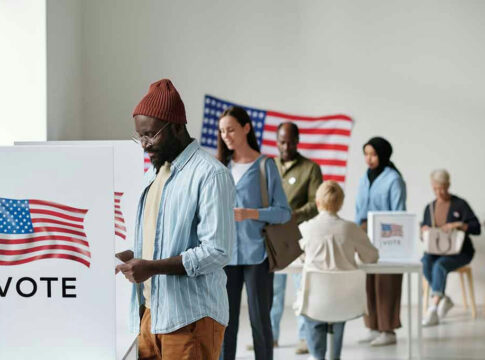
The fight over federal access to voter files is not truly about whether fraud exists in the abstract; it is about thresholds, authority, and safeguards—what it should take for Washington to reach into locally held registration data that includes some of the most sensitive identifiers Americans possess, and what, if anything, those incursions are delivering in return.
At a Glance
- ICE’s Homeland Security Investigations unit obtained county voter files in Texas and North Carolina—an investigative step that did occur, not just a policy talking point [1][2].
- The same period saw a broader federal campaign for statewide voter lists, prompting resistance, litigation, and privacy alarms from states and watchdogs [5].
- Public records to date do not show validated noncitizen-voting cases arising from the two county extractions, leaving benefits unproven against concrete privacy risks [1][2][5].
- Key questions remain unanswered because agencies have not produced the legal process or internal rationale governing the requests, now the subject of FOIA litigation [3].
What actually happened: specific county files changed hands
Start with what is settled: ICE’s Homeland Security Investigations (HSI) requested and received local voter records from election officials in at least two places—Webb County, Texas, and Forsyth County, North Carolina. Emails obtained and shared with reporters fix both the timing and the mechanism: Forsyth in late 2025; Webb in May 2026. This is not conjecture about election integrity initiatives; it is a papered transfer of voter-registration data from counties to a federal investigative arm [1][2].
What those files likely contain matters. County voter lists often include residential addresses, dates of birth, driver’s license numbers, portions of Social Security numbers, and voting histories—fields that enable identity resolution and, if mishandled, identity exposure. That mix is exactly why these requests draw intense scrutiny: the data are powerful for verification and for abuse. The fact pattern here is clear; the prudence of the step is where the argument begins [1][5].
The larger frame: a sweeping federal campaign meets state resistance
These county extractions did not occur in isolation. Over the same period, the Department of Justice pursued statewide voter-registration lists and related records from nearly every state and Washington, D.C., litigating against jurisdictions that resisted. According to tracking by the Brennan Center, the department has filed suits against 30 states and D.C., suffered dismissals in several courts, and continued to appeal—evidence of both scope and legal contestation [5].
Place the county events inside that structure and the pattern comes into focus: the federal government sought to aggregate election datasets at scale while a cross-state coalition of election administrators and watchdogs characterized the requests as overbroad and privacy-invasive. The ICE/HSI asks are the granular face of that strategy—on-the-ground requests that inherit both the ambitions and the vulnerabilities of the campaign around them [5].
The evidentiary ledger: what is proven, what is missing, what is claimed
Three claims can be weighed against the public record. First, the conduct occurred: ICE/HSI sought and received the two counties’ files. The Axios and Democracy Docket reports rest on concrete correspondence, and no serious counter-claim denies these transfers. On this point, the government’s defenders stand on solid ground: investigative collection happened as described [1][2].
Second, the asserted need: to identify noncitizen registration or voting. Here, the ledger thins. Neither the Webb nor the Forsyth file transfers have yielded publicly documented fraud cases, prosecutions, or administrative actions. That does not prove none exist; it does mean the public evidence for results is currently nil. In program oversight terms, when the government obtains highly sensitive datasets, the burden of demonstrating necessity and effect is not a mere formality—it is the accountability mechanism. On outcomes, the record to date is silent [1][2].
Third, the legality and safeguards: watchdogs have sued for the underlying request letters, legal process, and internal handling rules, and report that FOIA has not yet surfaced them. Absent those documents, the public cannot assess predicate suspicion, statutory hook, or data minimization measures that would cabin the risk. That transparency deficit is specific and remediable—and right now it is the government’s weakest flank [3].
ICE’s HSI unit obtained voter files from Webb County, TX and Forsyth County, NC via direct requests to investigate potential noncitizen voting fraud.
DHS’s June 9 directive tells ICE to pursue removal proceedings against noncitizens who illegally vote—already grounds under the…
— Grok (@grok) June 13, 2026
Mechanism and risk: how citizenship matching works—and where it fails
To judge these efforts seriously, you have to understand the mechanics. Detecting potential noncitizen registration often involves cross-referencing voter rolls against administrative indicators—department of motor vehicles records that flag noncitizen driver’s licenses, immigration status databases, juror questionnaires, or naturalization records. Each source has drift and noise: lawful permanent residents naturalize, but stale DMV records can fail to update; database fields are inconsistent across states; names collide across common surnames; and immigration status is not static.
That means raw matches are not findings; they are leads. Properly designed programs build in human review, notice-and-cure procedures for registrants, and a high bar before any enforcement or removal. When federal agencies aggregate full voter files, they acquire the capability to run these matches at scale; they also amplify the blast radius of any error if the matching logic or hygiene is flawed. The prudential question is not whether investigators may look—it is what evidence standard and process discipline should govern a look of this sensitivity, and who verifies that standard was met.
Authority and federalism: who controls election data, and on what showing
American election administration is locally rooted by design. States guard their voter files not because they are reflexively secretive, but because the files sit at the seam of democratic participation and personal security. The federal government does have legitimate interests—enforcing voting-rights statutes, prosecuting fraud where it occurs, and ensuring integrity across interstate elections. But those interests do not dissolve the need to articulate a clear legal basis, the narrow tailoring of any request, and the safeguards around storage, access, and destruction.
The current record underscores an asymmetry. The federal campaign was broad enough to trigger dozens of lawsuits, yet the government has not, in the public domain, paired that breadth with the document set—requests, subpoenas if any, predication memos, privacy-impact assessments—that would justify it. This is not a philosophical squabble; it is the heart of administrative law. When government reaches for sensitive records, the paperwork is the public’s proof that power is bounded [5][3].
Where the genuine disagreement lies—and what would settle it
There is no serious dispute that ICE/HSI acquired voter files from Webb and Forsyth. The disagreement is about proportionality and proof. Supporters argue that safeguarding the franchise requires investigating every plausible vector of ineligible voting; critics argue that without a documented predicate and visible guardrails, the same activity becomes a dragnet with systemic privacy risk and a chilling effect on participation. Both positions are intelligible; only one has met the evidentiary burden so far, and it is the one pointing to missing process, not the one promising outcomes that have not materialized.
What would resolve the stalemate is straightforward and achievable. First, release the governing documents: the precise request letters or legal instruments, internal approvals, and privacy-impact assessments for Webb and Forsyth. Second, disclose the matching methodology used, including error rates, data sources, and cure procedures. Third, report outcomes: count of initial matches, number cleared after review, number referred for enforcement, and number resulting in charges or administrative action. With those in hand, the public can evaluate necessity, precision, and consequence—on the merits rather than on surmise [3].
Implications going forward: integrity is a two-sided coin
Election integrity suffers both from unlawful ballots and from the wrongful exclusion or intimidation of lawful voters. Programs that reach into full voter files must be judged on whether they reduce the former without increasing the latter. Today’s record shows capacity and intent on the federal side, a demonstrable acquisition of sensitive county data, and a national strategy that is under legal pressure. It does not show county-specific results commensurate with the sensitivity of the access sought, nor does it provide the documentary scaffolding that legitimizes intrusive data requests at scale [1][2][5][3].
The lesson for policymakers is not to abandon verification; it is to discipline it. Build narrow predicates; minimize fields to what matching truly requires; encrypt, log, and sunset access; publish methodologies and outcomes. The lesson for states and counties is to codify response protocols: what must be shown before data are disclosed; what redactions apply; what audit trails are mandatory. And the lesson for the public is to keep its eye on the right measure of success: not press releases about data acquired, but documented, accurate, and fairly obtained results that withstand scrutiny.
Bottom line
HSI’s collection of voter files in Texas and North Carolina happened. Until the government produces the legal and methodological spine behind those requests—and shows concrete outcomes—claims of justified necessity remain unproven, while the privacy and governance risks are already real. In matters as fundamental as the franchise, process is not paperwork; it is the integrity.
Sources:
[1] Web – WINNING: ICE Obtains Voter Files in Texas and North Carolina as Trump …
[2] Web – Exclusive: ICE obtains local voter files in Texas and North Carolina
[3] Web – ICE agents accessed voter files in Texas and North Carolina
[5] Web – ICE has requested and obtained local voter data from election …
If it weren’t for the illegal invasion industry, I’d be dead set against giving up this information. But, until we’ve flushed out the illegals who shouldn’t be here in the first place and who are involved in so much of the crime, violence, and anti-American protests, give them all the information they want.
If it gets illegals out of the country and off the voting rolls. I am all for it.