
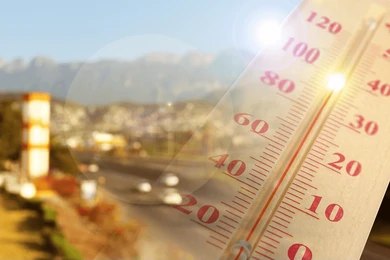
America’s busiest summer week is arriving with air that feels like a sauna turned to max.
At a Glance
- Extreme heat alerts spanned 31 states, covering about 90 million people, with wider exposure possible.
- Heat index values were forecast to peak near 115 degrees as humidity surged.
- Nights offered little relief, with lows stuck in the 70s across many areas.
- Pennsylvania’s core counties faced warnings through July 4 amid near 110-degree “feels like” readings.
Heat Alerts Stretch From the Gulf to New England
The National Weather Service issued Extreme Heat Warnings, Watches, and Advisories across 31 states on June 29. Officials projected that around 90 million Americans were under alerts. They warned that as many as two-thirds of the country could feel the heat during the peak window. Forecasts called for heat index values reaching 115 degrees in several corridors as the humidity deepened through early July. The agency framed the event as large, prolonged, and health-threatening for many communities.
Forecasters highlighted the heat index because humidity blocks the body’s cooling. Bryan Putnam, a National Weather Service forecaster, said the combination would push “well into the hundreds,” urging people to plan ahead for several hot days in a row. That matters because back-to-back days with high heat index increase risks. Bodies do not reset overnight when the air stays muggy. The result is a steady climb in stress that can catch people off guard at midweek events and holiday travel.
Nights Stay Warm, Risks Climb, Plans Change
Officials warned that overnight lows would hang in the 70s in many cities and towns. Homes without strong air conditioning would not cool much before sunrise. That pattern tends to boost heat exhaustion and heat stroke cases on day two and day three of a heat wave. The National Weather Service’s guidance makes sense: hydrate, seek cool air, and check on family. It is not politics. It is physiology and pattern recognition from decades of events.
Central Pennsylvania became a microcosm of the larger setup. On July 1, the National Weather Service extended an Extreme Heat Warning through July 4 for Adams, Dauphin, Lancaster, Lebanon, and York Counties. Temperatures near 100 degrees were expected, with humidity pushing the “feels like” close to 110 degrees. Local officials prepared cooling options, and emergency managers pushed personal checklists for outdoor workers, older adults, and people with health conditions.
What We Know, What We Don’t, and What Matters Now
Some outlets leaned into record-breaking headlines before confirmation. That can backfire if a few numbers fall short, but it does not change the core risk: sustained, sticky heat that strains the body and the grid. The National Weather Service did not publish wet-bulb temperature numbers in these public forecasts, focusing instead on heat index. That choice aligns with long-used public health messaging that the average person can act on fast.
"a prolonged, dangerous heat wave will intensify across the central and eastern U.S. this week. The extreme heat will continue through Friday ….."
"Extremely Dangerous Heat Expected. High temperatures of 95-105 degrees combined with high humidity will result in heat indices of… https://t.co/xvy6nPt53I
— Dan Tsubouchi (@Energy_Tidbits) July 2, 2026
Academic work from Pennsylvania State University suggests that humans struggle at lower wet-bulb thresholds than once thought, near 87 degrees Fahrenheit in lab tests. That supports caution when humidity spikes, even if dry thermometer readings do not shock people. Government forecasters spoke to the same basic truth in plain terms: the air would feel oppressive and dangerous for many hours, for several days in a row. Common sense says prepare, not debate jargon during a heat wave.
Practical Steps That Respect Freedom and Reality
Personal responsibility starts with simple rules. Drink water early and often. Check on older neighbors. Plan yard work at dawn, not noon. If air conditioning is not available, spend time in shaded public spaces or cooling centers if open. Local governments can help by expanding hours and cutting red tape for access. That is not overreach; it is targeted service during a predictable threat. Families and businesses can handle the rest with clear, timely facts and flexible planning.
Sources:
insiderpaper.com, usatoday.com, watchers.news, washingtontimes.com, npr.org, reddit.com, climatecheck.com