
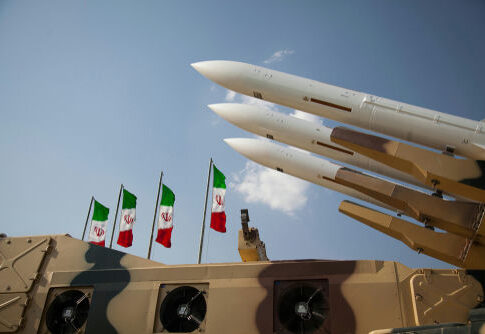
As missiles fly between Israel and Iran, President Trump’s demand to “stop shooting immediately” underscores a high-stakes test of deterrence, diplomacy, and American leadership in a volatile region.
Story Snapshot
- Israel struck military targets in western and central Iran after Iran launched missiles at Israel [3][7].
- Israeli leaders framed their action as defensive deterrence against an existential threat from Tehran [4].
- Live reports said the exchange jeopardized fragile ceasefire efforts and broader diplomacy [3].
- President Trump urged both sides to halt fire immediately, signaling a push to contain escalation [12].
Retaliatory Chain: What Happened and Why It Matters
CBS reported that Iran and Israel traded strikes as the conflict hit the one hundredth day, with Iran launching missiles at Israel and Israel responding with air operations targeting military sites inside Iran [3]. NBC’s broadcast described Israel’s strikes as occurring hours after Tehran’s attack, reinforcing a direct retaliatory sequence [7]. The Israeli military publicly tied its actions to Iranian missile fire, specifying that targets were military and located in western and central Iran, a claim echoed across multiple outlets tracking the exchange [3][7].
Reporting indicated that the exchange threatened already fragile ceasefire efforts, raising the risk of a broader war drawing in regional proxies and great-power diplomacy [3]. The Institute for the Study of War’s assessment placed the confrontation in a wider pattern of dueling narratives and incomplete early battle-damage information, a reminder that first-day facts often rely on official statements more than independent verification [1]. These constraints justify caution while still acknowledging the documented trigger: Iranian missile launches followed by an Israeli military response [3][7].
Israeli Rationale: Deterrence and Target Discipline
Prime Minister Benjamin Netanyahu framed Israel’s objective as removing the existential threat posed by Iran’s regime, while Foreign Minister Gideon Sa’ar argued that delay would allow Tehran to advance its nuclear program and mass-produce long-range missiles [4]. Broadcast and wire-style reports described Israel’s strikes as focused on military targets, not civilian infrastructure, aligning with a deterrence logic that seeks to punish aggression without widening the battlefield to noncombatants, though site-level independent verification remained limited in early coverage [3][7].
Factual gaps persisted around the precise legal authorization and proportionality analysis within Israel’s government, as public sources did not reveal cabinet minutes or rules-of-engagement documents [3][4][7]. Early damage assessments from Iran’s missile attack on Israel also leaned on official accounts, with limited independent confirmation of impacts or casualties [3][7]. These limits do not erase the sequence but counsel readers to distinguish between established timelines and still-unverified tactical specifics. Conservatives should demand clarity while recognizing Israel’s right to self-defense when rockets target its population.
U.S. Leadership: Restrain the Fire, Back the Ally
Live reporting indicated that President Trump called for an immediate halt to hostilities, telling both Israel and Iran to stop firing, a message amplified in international coverage tracking the crisis in real time [12]. That posture aims to contain escalation, protect global commerce, and prevent further strain on American families through energy shocks, all while maintaining support for Israel’s security. CBS’s framing that the strikes imperiled ceasefire efforts highlights the diplomatic minefield the administration is working to navigate [3].
Israel said it struck military targets in western and central Iran. The strikes come after it intercepted missiles that Tehran fired, according to Israel.https://t.co/wNuLiy7iV1
— ABC 13 News – WSET (@ABC13News) June 8, 2026
Policy discipline now means three parallel tracks: backing Israel’s right to defend itself against missile attacks, pressing Tehran to halt aggression that destabilizes the region, and coordinating with partners to keep a lid on energy volatility and supply chains that hit American wallets. Conservative readers should watch for verifiable evidence on targets and outcomes, insist that any de-escalation does not reward the regime in Tehran, and support measures that strengthen deterrence without inviting a wider war that burdens U.S. service members and taxpayers.
Sources:
[1] YouTube – Israel hits Iran with new strikes despite Trump warning
[3] Web – IDF says it expects several days of fighting against Iran; PM holds …
[4] Web – Live updates: Israel and Iran trade strikes, imperiling already …
[7] YouTube – Oil Jumps After Israel Strikes Iran; AI Rally Cools
[12] Web – IDF says it struck military targets in western and central Iran …
STOP SCREWING WITH THESE PEOPLE THEY WILL NEVER STOP WANTING TO DESTROY US.THE ONLY THING THEY UNDERSTAND IS FORSE.