
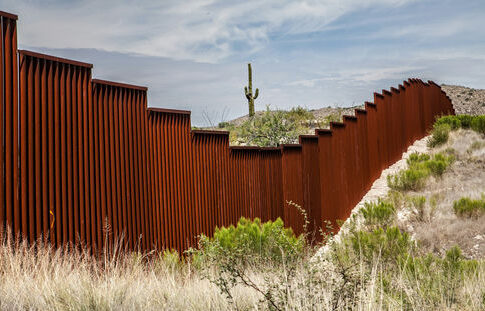
In West Texas right now, some families are being told to sign for a border wall or risk watching the government take their land anyway.
Story Snapshot
- Federal law gives Washington sweeping power to take private land for a border wall through eminent domain and legal waivers.
- Texas state leaders banned eminent domain for the state’s own wall, but that does not stop federal seizures.
- Border landowners are getting “right-of-entry” offers with small bonuses and veiled threats of condemnation if they refuse.
- Past wall projects show a pattern of lowball deals, waiver of safeguards, and years-long fights over “just compensation.”
How Texas families ended up in a federal land squeeze
Picture land your grandparents scratched out of the desert, where every fence post holds a story, and then a federal letter lands in your mailbox. That is what is happening along the Rio Grande and in the Big Bend region. Customs and Border Protection has sent landowners “right-of-entry” construction offers, dangling up to about $5,000 if they sign and allow surveys and prep work for a border wall on their property.[2][3][6] The same packets warn that if owners refuse or delay, the government can sue to condemn their land and move ahead without consent.[2][3][6]
For people who are not lawyers or wealthy ranch barons, that is not a polite invitation. It is a shot across the bow. Many owners know that hiring counsel, surveyors, and appraisers costs money they may not have. When Washington suggests, “Sign now or face condemnation,” the message is simple: fight the federal government with your own wallet, or give in and hope you do not get steamrolled. From a common-sense conservative frame, that imbalance of power is exactly why property rights exist in the Constitution in the first place.
Why the federal government claims the upper hand
Congress helped create this situation decades ago. The Illegal Immigration Reform and Immigrant Responsibility Act, later strengthened by the Secure Fence Act, ordered miles of border barriers and gave the Department of Homeland Security authority to buy or condemn any land “essential” to control the border.[1][3][15] The REAL ID Act went even further, letting the homeland security secretary waive almost any law that slows wall construction.[1][3][15] That is why both the Trump and Biden administrations have issued waivers wiping out environmental and other rules in Texas counties to speed barrier projects.[1][2]
On paper, this is all wrapped in the familiar phrase “public use.” Courts have long allowed land takings for roads, dams, even pipelines. Supporters say a secure border fits that tradition and that Congress spoke clearly. The problem is that when Washington couples that power with broad waiver authority, ordinary safeguards fall away. A landowner can wake up in a legal world where the same agency that wants the land also writes the rules about how it takes it. That may be lawful under the current statutes, but it does not sit well with anyone who thinks government power should stay on a very short leash.
Texas pushed back, but only on its own wall
Texas lawmakers saw the risk to their own constituents and drew a line for the state’s border-wall program. In 2021 the Legislature barred the state from using eminent domain to seize land for the Texas-built wall.[4][5] Since then, state officials must rely on voluntary easements: one-time payments in exchange for a permanent strip for the barrier.[4][5] That change has teeth. Roughly a third of landowners approached have refused, forcing the state to build in remote stretches and leaving gaps where families simply said “no.”[4][5]
That is a small but important victory for property rights. It proves that when politicians want to, they can respect landowners and still pursue security goals. Yet it does not protect those same Texans from Washington. Federal eminent domain authority does not vanish because Austin decided to stay within stricter lines. For a rancher near Big Bend, that means the state may ask politely while the federal government can still show up with a condemnation suit and the force of federal court orders behind it.[3][4][14]
Lessons from earlier border land grabs
West Texas families are not the first to face this choice, and they can learn from those who went through it along the lower Rio Grande. After earlier wall mandates, the federal government filed more than 300 eminent domain lawsuits in Texas alone to seize land for fencing.[4][12][15] Many owners took quick settlements, often without full appraisals. Others fought, only to discover that the government had already taken possession while the “just compensation” battle dragged on for years.[4][9][12]
In far West Texas, the threat of land seizures for a border wall has families on edge.
In the Big Bend region, where some families have lived for generations, government letters seeking access to their land is sparking fear and resistance. https://t.co/iM6GEXs14i
— Texas Tribune (@TexasTribune) June 16, 2026
Investigations by journalists and legal clinics found serious problems: incorrect owners listed, sloppy surveys, and waivers of rules designed to ensure fair valuations and conflict-free appraisals.[3][4][9] Some families still have unresolved compensation cases more than a decade later.[4][12] That history explains why today’s landowners eye new right-of-entry letters with suspicion. When the same bureaucracy that mismanaged past takings promises to “do right this time,” skepticism is not anti-government; it is common sense.
What choices landowners really have now
Legally, federal power is strong enough that most experts say owners are unlikely to stop a taking outright.[3][4][14] But that does not reduce their choices to “sign and stay quiet.” Landowners can refuse early low offers, demand formal Yellow Book–standard appraisals, and hire their own appraisers to document full damages, including lost access and ranch operations.[4][8][14] They can organize with neighbors, push elected officials for oversight, and insist that any waivers or survey errors be exposed in court or in hearings.[2][3][9]
From a conservative viewpoint, the core question is not whether the nation needs a secure border; most on the right agree that it does. The real question is whether Washington honors the same property rights for a small rancher in Presidio County as it would for a big donor in a gated community. A serious border policy should not require families who built a life on the river to pick between safety and sovereignty over their own land. When government treats landowners as partners instead of obstacles, it proves that security and liberty can still walk the same fence line.
Sources:
[1] Web – Texas Landowners Face a Difficult Decision: Allow Border Wall or Lose …
[2] Web – DHS waives certain legal regulations to expedite border wall …
[3] Web – Lawsuit Challenges Big Bend Border Wall Construction
[4] Web – [PDF] obstructing human rights: the texas-mexico border wall
[5] Web – [PDF] Eminent Domain Along the Southern Border: Government Seizures …
[6] Web – Official Border Wall plans have been released for the Big Bend. If …
[8] Web – In far West Texas, the threat of land seizures for a border wall has …
[9] Web – As landowners resist, Texas’ border wall is fragmented and built in …
[12] Web – Zapata County landowners say border wall contractors … – TPR
[14] Web – Texas Landowners Dig In to Fight Trump’s Border Wall – VOA
[15] Web – Texas landowners in the Big Bend region are fighting federal efforts …