
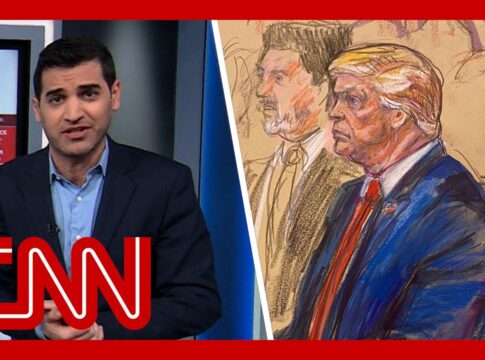
The Supreme Court prepares to hear arguments on President Trump’s policy restricting birthright citizenship, reviving a constitutional debate that stretches back more than a century to Chinese immigrants building America’s railroads.
Historic Case Returns to High Court
The justices will debate Trump v. Barbara on April 1, examining whether children born to illegal or temporary residents qualify for automatic citizenship. The policy challenges the 14th Amendment’s guarantee that “all persons born or naturalized in the United States” are citizens. Trump campaigned heavily on this issue in 2024, making it central to his immigration platform. The case mirrors the 1898 Wong Kim Ark decision, when the Court ruled that a San Francisco-born son of Chinese immigrants deserved citizenship despite laws barring his parents from naturalization.
Personal Stakes in Constitutional Battle
ACLU lawyer Cecillia Wang will argue against the administration before the Court. Wang’s own citizenship depended on the 14th Amendment when her Taiwanese parents attended graduate school in America before naturalizing. Her legal director role represents a full circle from Wong Kim Ark’s victory. The 14th Amendment was adopted after the Civil War to override the Dred Scott decision denying citizenship to African Americans. Some lawmakers opposed the citizenship clause specifically to prevent Chinese-born children from gaining citizenship rights. Congress later passed the Chinese Exclusion Act in 1882, the first immigration law based on race or nationality.
History of Immigration Tensions
The federal government argued in 1898 that Wong Kim Ark tried to circumvent the Chinese Exclusion Act by claiming 14th Amendment protections. The Supreme Court disagreed, ruling the amendment protected children of resident aliens regardless of race or color. During World War II, pressure mounted to overturn that precedent and strip Japanese Americans of birthright citizenship after Pearl Harbor. The Court resisted. Constitutional scholars note America has always debated immigration policy, with birthright citizenship becoming a flashpoint during periods of backlash against newcomers.
Constitutional Principles at Stake
The case tests whether the 14th Amendment’s phrase “subject to the jurisdiction thereof” excludes children of illegal immigrants. Trump’s administration argues it does. The ACLU contends the amendment’s plain language establishes birthright citizenship for virtually all children born on American soil. Legal experts recognize this represents a fundamental question about American identity and who belongs to the nation. The decision will shape immigration law and constitutional interpretation for generations, determining whether America maintains its traditional approach to citizenship or adopts new restrictions.
If Biden had his way we’d all be speaking Chinese by now! Thank God for Trump!
Remember that when the 14th Amendment was written, there was no such thing as a secure border.