
Twin earthquakes killed at least 235 people in Venezuela, and the U.S. military answered the call — deploying ships, aircraft, and a two-star general to help save lives in a country where American forces seized a dictator just months ago.
Story Snapshot
- Twin earthquakes struck Venezuela on June 24, 2026, killing at least 235 people and prompting the country’s interim government to ask the U.S. for help.
- U.S. Marine Corps Major General Kevin J. Jarrard landed in Caracas on June 25 to lead American relief efforts on the ground.
- U.S. Southern Command (SOUTHCOM) deployed two Navy ships, C-17 and C-130 transport planes, and search-and-rescue teams to support the mission.
- Critics and foreign rivals like Russia and China may frame the mission as political, but the Venezuelan interim government formally requested U.S. support.
Deadly Earthquakes Trigger U.S. Military Response
Two powerful earthquakes hit Venezuela on June 24, 2026, killing at least 235 people. [5] The disaster overwhelmed local resources and pushed the country’s interim government to act fast. Officials formally asked the United States for help. U.S. Southern Command — the military branch that covers Latin America and the Caribbean — responded within hours. By the evening of June 25, American forces were already on the move.
U.S. Marine Corps Major General Kevin J. Jarrard flew to Caracas to take charge of the American relief effort. [1] He serves as the top U.S. Southern Command official on the ground. His job is to work with local partners and make sure aid gets where it’s needed. This kind of senior leadership on the ground signals that Washington is treating this as a serious, coordinated mission — not a token gesture.
Ships, Planes, and Rescue Teams Deployed
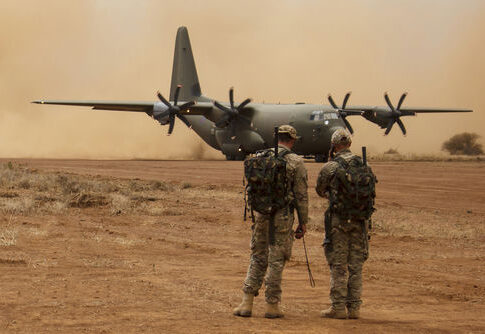
Southern Command General Francis L. Donovan ordered a significant force into action. The Navy sent two ships: the USS Fort Lauderdale and the USS Billings. [3] The Air Force deployed C-17 Globemaster and C-130 Hercules cargo planes to move supplies and personnel. Military helicopters and fixed-wing aircraft will also support search-and-rescue operations. [1] This is a real, large-scale response — not just a few boxes of bottled water dropped at a border crossing.
The U.S. Department of State is leading the overall American government response, with the military playing a support role. [1] That structure matters. It keeps the mission framed as humanitarian aid — not a military occupation. The interim Venezuelan government asked for this help, and the U.S. answered. That’s how it’s supposed to work between nations when disaster strikes.
Expect the Media to Spin This as Sinister
Some in the media and foreign governments will not give this mission a fair shake. Russia, China, and Venezuelan state television are likely to call it an invasion or “imperialist intervention” — even though Venezuela’s own government asked the U.S. to come. That’s the playbook of bad actors who prefer to see Venezuelans suffer than admit America does good in the world. Don’t be fooled by that framing.
U.S. Marine Corps Maj. Gen. Kevin J. Jarrard arrived in Caracas in the evening of June 25th, and is the senior SOUTHCOM official on the ground in Caracas currently.
U.S. Southern Command (SOUTHCOM) to support
ongoing earthquake relief efforts in Venezuela.SOUTHCOM Commander… pic.twitter.com/th1D15Y0uh
— Kagan.Dunlap (@Kagan_M_Dunlap) June 26, 2026
It’s also worth keeping in mind the broader picture. The Trump administration removed former dictator Nicolás Maduro from power in January 2026. Since then, Venezuela’s interim government has been working to rebuild. Now, just months later, the country faces a natural disaster on top of years of socialist economic ruin. The U.S. stepping in to help — at the request of Venezuela’s legitimate government — is the right call. It shows American strength and compassion working together, exactly what conservative foreign policy should look like.
Sources:
[1] Web – Senior military official lands in Venezuela to oversee US quake …
[3] Web – SOUTHCOM Leadership Arrives in Venezuela to Coordinate …
[5] Web – RELEASE: SOUTHCOM Leadership Arrives in Venezuela to …